Choose timezone
Your profile timezone:
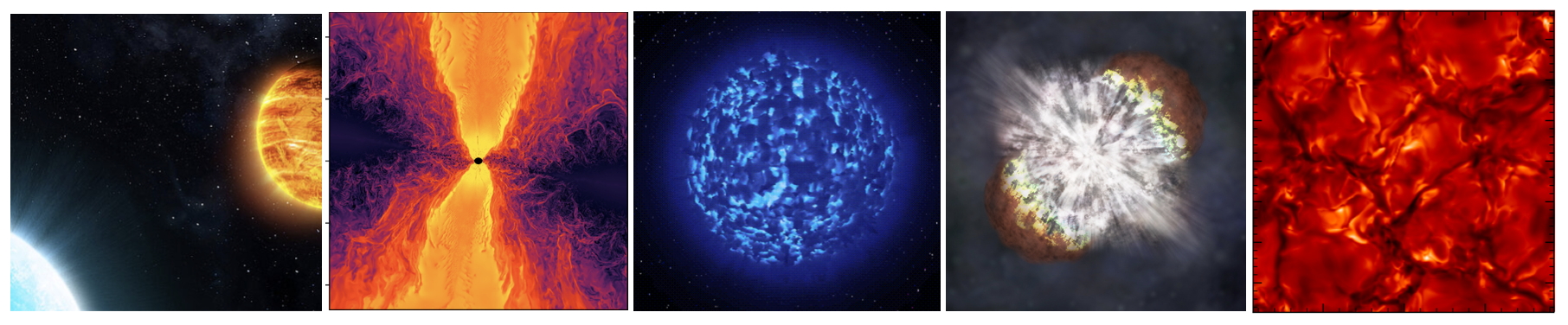
High-resolution transmission spectroscopy from ground-based facilities is a powerful tool for characterizing the atmospheres of close-in exoplanets. However, its interpretation depends on accurately accounting for stellar effects during transit, particularly the center-to-limb variation (CLV) and the Rossiter–McLaughlin (RM) effect. If neglected, these can mimic or distort planetary absorption signals, leading to biased atmospheric inferences.
Most corrections rely on canonical 1D LTE stellar atmosphere models, which fail to reproduce spatially resolved solar observations. In contrast, state-of-the-art three-dimensional radiation-hydrodynamic models with non-local thermodynamic equilibrium (3D non-LTE) line formation provide a physically consistent description of stellar line profiles and their CLV.
The first application of 3D non-LTE stellar spectra to the Na I D lines in transmission spectra showed that these models are essential for accurate atmospheric characterization. For the benchmark exoplanet HD 209458b, they reproduce observed Na I D features without requiring planetary absorption, confirming previous Na non-detections.
This work extends 3D non-LTE synthesis beyond sodium to other key species commonly targeted in transmission spectroscopy (K, Mg, Ca, O). Using ESPRESSO observations of giant exoplanets, I show how these models improve CLV and RM treatment and refine atmospheric interpretations. These results highlight the importance of realistic stellar modeling for future high-resolution studies.
Discovered deep within the “Neptunian desert", LTT9779b remains the only known ultra-hot Neptune, prompting significant speculation regarding its unique formation and evolutionary history. Its exceptionally high geometric albedo has previously been attributed to either clouds or an extremely metal-rich atmosphere. Here, we present a comprehensive panchromatic analysis of its dayside atmosphere using JWST NIRISS and NIRSpec/G395H observations to characterize its atmospheric structure and composition. Leveraging the exceptional signal-to-noise ratio (S/N) in the observed spectra, we report a 3-to-5$\sigma$ detection of dayside clouds, with strong evidence for Mg$_2$SiO$_4$(s) (silicate) condensation. This constitutes the first statistically significant detection of clouds on the dayside of a Neptunian-mass exoplanet. We demonstrate that a highly reflective cloud deck, rather than an extremely high-metallicity atmosphere, is the most likely explanation for the planet’s anomalously high optical albedo. Furthermore, our atmospheric retrievals yield robust detections of both CO ($\sim$4.88$\sigma$) and CO$_2$ ($\sim$8.76$\sigma$), while providing tentative constraints on the H$_2$O abundance and upper limits on SiO, TiO, and VO. Finally, our analysis robustly constrains the C/O ratio to 0.984 $\pm$ 0.019. This aligns LTT9779b with other known ultra-hot Jupiters exhibiting super-solar C/O ratios, suggesting a broader trend driven by the sequestration of oxygen-bearing condensates in ultra-hot atmospheres.
We seek to understand how the chemical evolution of protoplanetary disks influences the architecture and composition of planetary systems. Ice lines, where molecules freeze out, create distinct regions within the disk, altering elemental ratios like C/O, C/N, and N/O. Crucial for chemical stratification and planet formation, these lines increase solid density and facilitate planetesimal formation. Particularly, the H2O ice line has been proposed to explain the terrestrial-giant planet dichotomy in the Solar System, and recently, the radius valley in super-Earths and mini-Neptunes.To achieve this, we coupled the open-source code ChemComp to the global planetary formation model PLANETALP, developed by the Planetary Astrophysics Group of La Plata (GAP). This allows us to study condensation fronts by considering sublimation, recondensation, and diffusion, calculating the chemical composition of gaseous and solid phases throughout the disk.In this talk, I will present preliminary results obtained with PLANETALP after this coupling, showing surface density profiles of solids calculated from the abundance of each solid chemical species. I will also present preliminary results regarding the implementation of planetary formation and migration.
Radiation controls the thermal structure, dynamics, chemistry and observational signatures of protoplanetary disks, all of which shape how and where planets eventually form. While a full radiation hydro- treatment provides the most physically realistic description of disks, the high computational cost often necessitates the use of approximate radiative transfer methods. With this project, we compare moment methods like the flux-limited diffusion approach, and M1 to the more complicated discrete ordinate method while benchmarking the radiation fields against Monte Carlo radiation transfer (with RADMC3D). We perform radiation hydrostatic simulations of the classic "planet embedded in a disk" scenario with RHD modules of PLUTO and Athena++ to disentangle the differences between using different radiation methods, providing an important cross-code benchmark for radiation hydro physics in the context of planet-forming disks.
Massive stars eject strong winds that affect their evolution. When in a binary system, their winds collide and emit radiation across the spectrum, providing an opportunity to study the stars and the interaction between them. I will present simulations that include a detailed treatment of wind ejection, orbital motion, clumpiness, and more. I will discuss the results of systematic simulations that were used to determine the general conditions that may lead to accretion onto the star with the weaker wind, and demonstrate new relationships between the mass accretion rate and the ratio of the stellar wind momentum to the Bondi-Hoyle-Lyttleton accretion rate. Additionally, I will present simulations of mass ejection during giant eruptions in LBVs, and discuss the implications for the formation scenario of LBVs. Episodic accretion in wind-fed binaries can result in an accretion disk around the companion. I show simulations of how this disk interacts with the wind emitted from the secondary, creating a saw-blade accretion disk. I further show what happens to the accreting system in some cases where jets are launched. I will also present new stellar-evolution simulations revealing the effects of mass ejection and mass accretion at high rates on massive stars.
The increasing quality of spectroscopic observations has been providing unprecedented constraints on stellar evolution and nucleosynthesis theory. Interpreting these data requires an accurate understanding of the evolution of stars and the chemical yields they produce. In particular, complex multi-dimensional processes such as internal mixing and magnetic fields represent some of the main uncertainties affecting the evolution and structure of stars. While 1D stellar evolution models rely on parametrized prescriptions to describe these processes, multi-dimensional hydrodynamic simulations can provide detailed insights into their physical nature.
In this talk, I will present recent results from 3D simulations of massive stars during their advanced burning stages, including self-consistent nuclear burning and magnetic fields. I will discuss how these models improve our understanding of nucleosynthesys and how they can be directly tested against spectroscopic observations using Galactic chemical evolution models. This combined approach can provide new constraints on the evolution of stars and their role in shaping the chemical history of galaxies.
High-resolution near-infrared (NIR) spectroscopy is an increasingly important tool for stellar chemical abundance studies, especially for dust-obscured stars and chemical species that are difficult to measure in optical spectra. IGRINS and IGRINS-2 are leading instruments that provide simultaneous H- and K-band spectra at a resolving power of R ~ 45,000. However, several IGRINS-based studies have reported systematic abundance differences between the H- and K-band regions. These offsets are especially prominent for elements such as Mg, Ca, and Ti, and appear to be more significant for stars in specific ranges of effective temperature and metallicity, potentially limiting the precision of NIR abundance analyses. We investigate these abundance differences using a collection of IGRINS/IGRINS-2 spectra covering stars with a wide range of stellar parameters. Our results suggest that the offsets are not random, but are correlated with stellar properties such as effective temperature and metallicity, with different trends depending on the element. In this talk, I will present the observed trends, discuss possible origins including line selection, atmospheric parameters, and the possible role of NLTE effects, and explore empirical approaches to calibrating these systematics. This work provides a step toward more reliable chemical abundance measurements from high-resolution NIR spectroscopy.
3D NLTE radiative transfer provides the most physically realistic framework for interpreting high quality stellar spectra. Existing stellar spectroscopic surveys have observed on the order of one million stars, and upcoming surveys such as 4MOST and WEAVE will increase this number by an order of magnitude. The scale of these data sets presents a significant challenge: deriving accurate stellar parameters and chemical abundances efficiently. In this talk, I demonstrate how 3D NLTE radiative transfer can be applied to large spectroscopic surveys and quantify the systematic abundance differences introduced by differences in synthetic spectra and analysis methodology. I will also highlight some scientific results enabled by 3D NLTE abundances and discuss their implications for the interpretation of current and future stellar surveys.
In this talk, I will present recent advances in our understanding of the history of Galactic nucleosynthesis, driven by new observational data and improved stellar modelling. A key focus will be on insights into stellar chemical abundances made possible by state-of-the-art 3D radiation-hydrodynamics stellar atmospheres and non-local thermodynamic equilibrium (NLTE) spectral models. These results are part of the multidisciplinary series of studies Observational Constraints on the Origins of the Elements, which aims to provide a comprehensive framework for tracing the Galactic evolution of elemental abundances—from the lightest species (C and O), through the α-elements and Fe-peak elements, to the products of s- and r-process nucleosynthesis. I will present our 3D NLTE findings on the evolution of Fe-peak elements and discuss their significance for understanding core-collapse supernovae (CCSNe), Type Ia supernovae, and their progenitors. I will then explore neutron-capture element abundance ratios in the context of asymptotic giant branch (AGB) stars and neutron star mergers. The talk will conclude with a forward-looking perspective on extragalactic nucleosynthesis, emphasising the opportunities enabled by next-generation facilities such as JWST and the ELT.
The astrophysical site(s) of the rapid neutron-capture (r-) process remain one of the major open questions in nuclear astrophysics. Metal-poor, r-process enhanced stars provide a unique fossil record of the earliest nucleosynthetic events, but the ability to discriminate between competing production sites relies on the accuracy of the inferred stellar abundance patterns
We present a new abundance analysis of the very metal-poor ($[\mathrm{Fe/H}]\approx-3.5$) r-process-enhanced star SMSS J200322.54$-$114203.3 based on high-resolution UVES spectroscopy, state-of-the-art 3D hydrodynamical model atmospheres, and both LTE and NLTE radiative transfer. We derive homogeneous 3D NLTE abundances for Na, Mg, Al, Si, Ca, Cu and Ag, together with 3D LTE abundances for additional neutron-capture elements, enabling a direct comparison with previous 1D LTE studies.
The revised abundance pattern exhibits large, element-dependent corrections, reaching up to $\sim1$ dex for key elements. These differences substantially modify the abundance ratios used to confront observations with nucleosynthesis models and significantly weaken the previously reported agreement with magnetorotational hypernova yields. Our results demonstrate that realistic 3D NLTE abundance analyses are essential for robustly identifying the astrophysical origin of the r-process and for constraining models of early Galactic chemical evolution.
Oxygen abundances in very and extremely metal-poor (V/EMP) stars provide critical constraints on early massive stars' nucleosynthesis. We present an oxygen abundance analysis for 35 V/EMP stars ($-4.0<\text{[Fe/H]}<-1.5$) using near-infrared $H$-band OH lines from high-resolution Subaru/IRD spectra. To evaluate these atmospheric diagnostics, we compare OH-based abundances against the 3D/NLTE-insensitive [OI] 6300Å line using archival optical spectra. Oxygen abundances are determined via 1D/LTE spectral synthesis.
We identify a strong temperature-dependent discrepancy between the tracers. In cooler red giants ($T_\text{eff}\lesssim4600$K), OH-based abundances are systematically lower than [OI] by 0.05-0.25 dex, while warmer RGs show a higher one, directly consistent with expected 3D atmospheric effects on molecular lines in general. Despite this systematic offset, thanks to numerous near-IR OH lines yields significantly smaller random errors than relying on a single, weak [OI] line.
Leveraging this statistical precision, we derive an empirical calibration to align our more precise 1D/LTE OH-based abundances onto the robust [OI]-based abundance. This correction is not equivalent to canonical 3D/NLTE OH-based abundances, but it substantially reduces scatter in the [O/Fe] trend, bringing our OH-based abundances into better agreement with Galactic chemical evolution models. Additionally, we are ready to extend this study to even lower metallicity RGs using new Subaru/IRD observations.
Massive stars undergoing iron-core collapse at the end of their evolution terminate their lives either in a successful or a failed supernova (SN). Their final fate and the explosion energy, Eexpl, depend on the Equation of State of dense matter, on uncertain neutrino physics and on properties of the stellar progenitor. An improved understanding of the stellar progenitor dependence of Eexpl is important for many astrophysical studies, including the chemical enrichment due to explosive nucleosynthesis and the SN feedback on star formation. In this work, we use theoretical data obtained from a large sample of detailed 1D hydrodynamical SN simulations with fixed microphysics to train a machine-learning model predicting final fates (successful vs failed SN) and Eexpl, as a function of properties of the stellar progenitor. We apply it to a set of newly computed stellar progenitor models to calibrate their piston-driven explosions in 1D hydrodynamical SN simulations. Informed by the latter, we investigate how explosive nucleosynthesis yields vary with progenitor mass and metallicity. We find that the SNe of the statistically dominant low-mass stars have energies much lower than the canonically assumed 10^51 erg, and that with decreasing metallicity, more black holes form but successful explosions are more energetic.
Extremely-metal-poor (EMP) stars carry the chemical imprint of the first supernovae, offering a window into the initial mass function (IMF) of Population III (Pop III) stars. Upcoming surveys like 4MOST promise to greatly enhance these constraints through improved element coverage and larger samples, with key implications for a myriad of astrophysical topics including massive-star evolution and nucleosynthesis, galactic chemical enrichment, and the interpretation of JWST observations. However, despite several potential biases, this methodology has never been rigorously tested. I will present an updated pipeline for constraining the Pop III IMF, with particular focus on testing its reliability. We consider the largest available catalogue of EMP abundances in the Milky Way from the SAGA database, corrected for 3D and non-LTE effects, and compare them to state-of-the-art theoretical supernova yields to infer the Pop III progenitor properties. We further fit their resulting mass distribution, and construct a detailed synthetic test to quantify how model degeneracies bias the recovered IMF, as a function of IMF slope. This allows us to provide corrected results on the Pop III IMF, and forecast the potential of upcoming surveys to substantially reduce the biases. Our refined treatment also accounts for interstellar medium dilution and progenitor explodability.
The $^{12}$C($\alpha,\gamma$)$^{16}$O reaction sets the
carbon-to-oxygen ratio after core helium burning and thereby
influences the subsequent evolution and nucleosynthesis of
massive stars. Its rate at stellar energies, however, remains
uncertain. We present an observationally motivated diagnostic
by combining Chandra X-ray spectroscopy of the oxygen-rich
supernova remnant G292.0+1.8 with MESA stellar-evolution
calculations. Principal-component analysis of narrow-band images
is used to identify six O/Ne/Mg-rich ejecta regions with minimal
contamination from Si/S-rich and non-thermal components, and their
Ne/O, Mg/O, and Si/O mass ratios are derived using non-equilibrium
ionization plasma models. We compute non-rotating,
solar-metallicity progenitors of $13$, $16$, and $19\,M_\odot$,
varying the reference $^{12}$C($\alpha,\gamma$)$^{16}$O rate by
factors of $0.5$--$1.5$. In the pre-collapse oxygen-rich layer,
Ne/O and Mg/O increase systematically with the adopted rate while
showing comparatively weak dependence on progenitor mass.
Comparison with the observed ratios suggests an allowed range of
approximately $0.7$--$1.3$ relative to the Kunz et al.\ reference
rate, although the inferred range depends on progenitor mass and
the adopted plasma model. By contrast, Si/O shows larger scatter,
reflecting sensitivity to late-stage shell structure and shell
interactions. These results support the use of O-rich ejecta
abundances as an independent astrophysical diagnostic of the
reaction rate.
For the origin of heavy r-process elements one verified astrophysical site exists up to now: neutron star mergers, identified by the spectra and the light curve of the kilonova related to GW170817.
But r-process nucleosynthesis predictions exist also for a number of additional sites: magneto-rotational supernovae with possibly related magnetar giant flares, collapsars/hypernovae as end stages of massive stars leading to black hole formation, and further binary mergers including black holes and white dwarf. The predicted ejecta composition and the expected occurrence frequency of such events can provide clues for the imprint of these sites on the following stellar generation in the early galaxy and their relation to observed limited-r, r-I and r-II abundance patterns (with or without actinide boost). We analyse the appearance of such patterns as a function of the metallicity [Fe/H] and address the question whether there exists an r-process universality among r-I and r-II stars in an attempt to come up with a consistent understanding of the role of all r-process contributions to early galactic evolution [see e.g. 1].
[1] Thielemann, F.-K. & Cowan, J. J. The r-process: history, required conditions, astrophysical sites, and observations. European Physical Journal A 62, 105 (2026).
M31-2014-DS1 and NGC 6946-BH1 are candidate failed supernovae associated with black hole (BH) formation. Their rapid optical fading, accompanied by infrared brightening, suggests that newly formed dust may obscure the central source and reradiate its energy in the infrared. Understanding dust formation and the resulting infrared emission is therefore crucial for probing BH formation in failed supernovae electromagnetically. However, the timing of dust formation, grain sizes and composition, and their effects on light curves and SEDs remain uncertain. Here, we investigate dust formation in failed supernovae and its observational consequences. Using a thermal evolution model of the ejecta, we follow time-dependent nucleation and grain growth and calculate light-curve and SED evolution from the resulting dust size distributions. For the explosion energy and ejecta mass inferred for M31-2014-DS1, we find that efficient dust formation occurs around 1000 days after explosion. The optical depth to optical photons subsequently reaches $\tau_{\rm opt}\sim10^3$, and the ejecta may remain optically thick for roughly 100 years. These results suggest that failed supernova candidates can be optically obscured for decades, while their emission emerges primarily as an infrared afterglow. I will discuss the dust formation process in failed supernovae and its impact on light-curve and SED evolution.
Pair-instability supernovae (PISNe) are the final fates of massive stars with initial masses ranging from $140$--$260\,M_\odot$. Due to the efficient synthesis of ${}^{56}\mathrm{Ni}$, PISNe can be very luminous phenomena. According to some previous works, not only PISN progenitor evolution but also PISN nucleosynthesis is strongly affected by the ${}^{12}\mathrm{C}(\alpha,\gamma){}^{16}\mathrm{O}$ reaction rate. However, these works are based on reaction-rate tables scaled upward or downward at all temperatures, despite the strong temperature dependence of nuclear reaction rates. In this work, we considered the temperatures at which helium-burning reactions are most important for ${}^{56}\mathrm{Ni}$ nucleosynthesis in PISNe using Monte Carlo methods. Specifically, we simulated stellar evolution with randomized helium-burning reaction rates and identified the temperatures at which variations in these rates are strongly correlated with ${}^{56}\mathrm{Ni}$ production. In this presentation, we will report our results in detail.
Chemical evolution theory is central to connect abundance observations with supernova models and galactic structure. However, one can argue that traditional approaches are too simplistic, i.e. missing/neglected parameters can lead to wrong conclusions. The most prominent example is the assumption of a 1-phase interstellar medium that distorts "chemical clocks" and e.g. lead to the conclusion that neutron star mergers cannot be the main source of r-process elements, while full modelling with a 2-phase ISM leads to the opposite conclusion (i.e. neutron star mergers must be the main source).
I will provide an overview of the main points where the chemical evolution picture must be changed that connect (and explain) such different observations as abundances in dwarf galaxies, a run-away star from the Galactic Centre region, peculiar stellar abundances, and other observations like the large-scale Galactic abundance profiles or radial migration.
In core-collapse supernova simulations, photons become dynamically relevant as the ejecta expand, whereas neutrinos dominate the earlier phases. Modern approaches employ long-term photon radiation-hydrodynamics codes, where the explosion is either mapped from a self-consistent supernova code or triggered artificially. Treating photons within a self-consistent explosion code removes the need for remapping.
We present a grey two-moment (M1) photon-transport module in the multidimensional, special-relativistic neutrino magnetohydrodynamics code Aenus-ALCAR, the first supernova code capable of following neutrinos and photons from core-collapse to shock breakout. Our special relativistic, one- to three-dimensional module evolves the laboratory-frame radiation energy density and flux with comoving-frame opacities (mixed-frame formulation), retaining interaction terms to all orders in v/c. An IMEX scheme treats transport explicitly, via a Godunov-type finite-volume method, with signal speeds corrected against excessive diffusion in optically thick cells. Matter–radiation coupling is solved implicitly, including energy and momentum exchange and conserving total energy. One- and two-dimensional benchmarks, such as free streaming, stiff thermal coupling, diffusion, and radiative shocks, validate the module across all optical-depth regimes, agreeing with published M1 implementations.
Together with radiative post-processing, the module paves the way for self-consistent three-dimensional supernova models from core collapse towards synthetic electromagnetic observables.
The nebular phase of a supernova occurs several months to years after the explosion, when the ejecta become mostly optically thin yet there still is sufficient radioactive material to pump energy into the expanding remnant. The asymmetries created by the explosion are encoded into the line profiles of the emission lines which appear in the nebular phase. Modern 3D supernova simulations have been advanced past shock breakout, allowing us to fast-forward them into the nebular phase through homologeous expansion. Nebular phase synthetic spectra of these explosion models can then be generated using the newly developed 3D NLTE radiative transfer code $\texttt{ExTraSS}$ (EXplosive TRAnsient Spectral Simulator). In this talk, I will highlight the spectra of a low-mass ($9.0\,M_\odot$) progenitor model and showcase how the 3D mixing affects the spectral line profiles of such a low-mass iron core-collapse supernova, and how they compare against observed low-luminosity supernovae. I will also show the direct impact of the $^{56}$Ni bubbles mixing into the envelope, and how this effect can be traced in the nebular phase through line profile analysis, and how the viewing angle impacts the line profiles and luminosities.
moderation Richard Hoppe
Prof. Alex Filippenko, Prof. Ken'ichi Nomoto, Prof. Stanford Woosley
all students are warmly invited
Kilonovae (KNe) are one of the most important keys to understanding r-process nucleosynthesis. However, their observables are very challenging to interpret, as they are made of a mixture of r-process elements with very complicated atomic structures that expand at extremely high velocities. Other difficulties include the asymmetric nature of the ejecta and the rapid drop in density into a region where NLTE treatment is necessary.
ExTraSS is a spectral code designed for the 3D NLTE modelling of supernovae in the late-time nebular phase, with line-by-line transfer. We are extending this code to kilonovae, with the aim of producing the first synthetic spectra and light curves of KNe in 3D NLTE. We are currently using optically thin conditions, heating rates based on the electron fraction, and a mixture of a few r-process elements.
We demonstrate how greatly the physical conditions and the resulting spectra vary with the morphology of the ejecta and the viewing angle of the observer, using toy models and the merger models of Rosswog et al. We focus not only on the entire spectrum but also on detailed line profiles, which have the potential to encode the distribution of each element, connecting observations with merger models and nucleosynthesis.
Stellar abundances show non-monotonic evolution of [Y/Eu] and [Sr/Eu]: a decline with increasing [Eu/H] at low metallicity, a minimum at $[\mathrm{Eu/H}] \sim -0.3$, and a rise at high metallicity. This pattern necessitates at least three distinct neutron-capture sources acting on different timescales. We develop a one-zone chemical evolution model to constrain their delay times, rates, and yield ratios. To reproduce the observed $\mathrm{[Y/Eu]}$ and $\mathrm{[Sr/Eu]}$ sequences, we find that a delayed $r$-process channel (likely BNS mergers) dominates Eu production ($\gtrsim 95\%$), while a prompt channel produces first-peak elements with minimal Eu, explaining the rise in [Y/Eu] at lower [Eu/H] below $[\mathrm{Eu/H}] \lesssim -2.5$. Delayed AGB $s$-process enrichment, with delays $t_{min} = 0.3-0.6$ Gyr, accounts for the late-time upturn in Y (Sr). Our model quantitatively matches constraints, including the $\Delta[\mathrm{Y/Eu}] \approx 0.6$ dex variation and the minimum at [Eu/H] $\sim -0.3$. The yield ratios for first and second peaks are $[\mathrm{Y/Eu}] \approx -0.3$ (prompt) and $\approx -0.8$ (BNS mergers), establishing a lower limit of $\gtrsim 3.4$ for the yield ratio, thus ruling out models with similar ratios.
Binary neutron star (BNS) mergers provide a unique cosmic laboratory for understanding the origin of heavy elements ($Z > 26$), solving a long-standing mystery in astronomy. In the neutron-rich ejecta from these mergers, heavy elements are synthesized through rapid neutron capture nucleosynthesis ($r$-process). The radioactive decay of these freshly produced nuclei powers ultraviolet-optical-infrared emission known as a kilonova. BNS mergers are also prime sources of gravitational waves (GWs) and can produce short gamma-ray bursts. Kilonovae have now been detected through follow-up observations of gravitational-wave and gamma-ray-burst events.
Kilonova light curves and spectra depend critically on detailed heavy-element atomic data, which remain unavailable, especially for the late nebular phase ($t > 1$ week). In this talk, I will present our recent progress toward realistic modelling of nebular kilonova spectra, enabled by new atomic cross-sections calculated for key processes in the ejecta, e.g., recombination rate coefficients. I will highlight our new calculations for tellurium, a promising candidate element in kilonova spectra, as well as selected lanthanides. These models are essential for interpreting future kilonova observations with the James Webb Space Telescope (JWST), and potentially important for Extremely Large Telescope.
The rapid growth of transient astronomy has highlighted the profound impact of multi-dimensional asymmetries—such as off-center radioactive distributions and jet-like structures—on observed light curves. While numerical Monte Carlo simulations capture these geometric effects, they often obscure the underlying physical intuition. In this work, we present an innovative analytic diffusion framework for radiation transport in homologously expanding, asymmetric ejecta, capable of deriving the angle-dependent bolometric luminosity for arbitrary observer orientations. By treating localized radioactive heating through a Green’s-function formalism and utilizing a grey-atmosphere approximation, our model maps local internal asymmetries directly to global, orientation-dependent observables.
While perfectly generalizable to a wide variety of astrophysical transients, we demonstrate the utility of this framework by examining viewing-angle scatter in the bolometric luminosity–width relation of Type Ia supernovae. We show that geometric asymmetries naturally drive predictable, correlated variations in both peak luminosity and light-curve width, scaled primarily by the spatial displacement of the heating source. This analytical framework is well-validated by detailed multi-dimensional radiative transfer codes, capturing the core physical trends with high fidelity. Ultimately, this model offers the community a powerful, transparent, and computationally instantaneous tool to decipher orientation effects across the transient landscape.
A favoured channel for the creation of rapid neutron capture (r-process) elements is the merging of binary neutron stars, for which only two spectroscopically confirmed events exist: AT2017gfo and AT2023vfi. While the spectra of these objects have revealed r-process signatures, inferring elemental abundances remains a challenge. In the photospheric phase, large expansion velocities of ~0.1-0.2c and radiative transfer effects lead to significant line blending. The nebular phase offers a promising opportunity for spectral analysis free from these obstacles, though a detailed understanding requires usage of non-local thermodynamic equilibrium (NLTE) radiative transfer simulations. These simulations require diverse atomic data for r-process species, thus far sparsely known. Early works have therefore made use of approximations and complete, but inaccurate atomic data in first attempts to model the nebular phase. We present here a systematic study on the impact of recently published, accurate atomic data on nebular phase spectral models, specifically: calibrated energy levels and transitions, thermally averaged collision strengths, photoionisation cross-sections, and recombination rates. We focus on tellurium (Z = 52), a prime candidate potentially identified in observed spectra, and examine how its spectral signatures are modified by the inclusion of new atomic data.
Tidal disruption events occur when a star ventures too close to a supermassive black hole and is torn apart by tidal forces, producing a luminous flare as the stellar debris fuels the compact object. Interpreting observations requires connecting the complex hydrodynamics of the disrupted debris to the processes that shape the emerging radiation. In this talk, I will present a suite of interlinked first-principles simulations that capture the key stages of gas evolution and establish their connection to the resulting electromagnetic emission. Following fallback toward the black hole, we find that the debris stream passes through a nozzle shock without experiencing significant expansion. Relativistic apsidal precession subsequently causes the stream to intersect with itself, producing a self-crossing shock that launches a large-scale outflow. A fraction of this debris rapidly circularizes into an accretion disc through multiple secondary shocks, while radiation diffuses through the surrounding gas envelope. Emission from the disc likely powers the observed X-ray signal, while reprocessing by the envelope can give rise to the emerging optical emission. This work paves the way toward a physically motivated characterization of the electromagnetic signatures of tidal disruption events, enabling a full exploitation of the rapidly growing sample of observations.
A tidal disruption event (TDE) occurs when a star is torn apart by the strong tidal pull of a supermassive black hole. The disruption results in the formation of an elongated stream of gas which cools down adiabatically due to the tidal stretching. As the temperature drops, the gas is expected to undergo chemical processes, which release thermal energy into the stream, potentially affecting the subsequent evolution. In this talk I will present the results of global hydrodynamic simulations using GIZMO to study the dynamical impact of chemical transitions on the early-time evolution of a TDE. We incorporate a realistic equation of state that assumes local thermodynamic equilibrium to solve the Saha ionization and molecular equilibrium equations for hydrogen and helium. Our results demonstrate that the energy injected by hydrogen recombination and molecular hydrogen formation can widen the stream significantly, an effect that can impact the gas dynamics and radiative properties of shocks occurring after the second pericentre passage. The energy injected by recombination can also lead to radiative emission, which we estimate as part of this work. Ultimately, this work provides physically motivated initial conditions to model the later stages of TDEs and their observational signatures.
The kilonova AT2017gfo has demonstrated that neutron-star mergers indeed are astrophysical sites of the r-process, yet the detailed properties of its various ejecta components remain poorly understood. Numerical simulations of neutron star mergers, including all relevant physics ingredients and encompassing both the dynamical merger phase and the subsequent remnant evolution, are essential for accurately determining the ejecta properties and the resulting kilonova spectra.
Our recently developed end-to-end kilonova models establish a pipeline that coherently connects neutron star merger simulations and corresponding nucleosynthesis calculations with multi-dimensional kilonova radiative transfer models. Here, we present an ongoing project in which we have upgraded our special relativistic end-to-end models to a general relativistic framework in the neutrino-hydrodynamics code ALCAR adopting the conformal flatness condition. General relativistic effects are particularly important for a reliable prediction of the merger remnant lifetime before it collapses to a black hole. The lifetime, in turn, has a major impact on the amount and composition of the ejected material.
In this contribution, I will present general relativistic simulations of long-lived neutron star merger remnants and discuss the ejecta properties and implications for the resulting kilonova.
I will present results from recent research by myself and collaborators to study the disruption and fallback accretion during tidal disruption events. Using the state-of-the-art Athena++ and AthenaK codes, we solve the radiation transfer equation to accurately model the radiation forces, which play a key role in these sources that commonly reach super-Eddington fallback rates. I will particularly highlight our most recent results, which solve the relevant equations in a general relativistic Kerr spacetime. We find that even though the flows are slow to circularize, shocks between the infalling stream and either the returning stream or the eccentric disk that forms dominate the early energy release and angular momentum transport. Radiation forces drive both unbound outflows and generate an envelope of weakly bound material that acts as a reprocessing layer, potentially explaining the prevalence of optical/ultraviolet emission seen in many sources.
We present three-dimensional general-relativistic magnetohydrodynamic simulations of supermassive binary black holes embedded in gas during late inspiral. We investigate how the magnetic-flux content shapes the accretion flow and observe eruptions of magnetic-flux tubes near the black hole horizons. We follow their propagation through the mini-disks and into the circumbinary cavity, where they may contribute to transient electromagnetic activity.
We also introduce an efficient radiation-leakage scheme for incorporating physical cooling in geometrically thin accretion-disk simulations around single and binary black holes. This approach is designed as a practical step toward long-duration, high-resolution radiative GRMHD models and the study of electromagnetic counterparts to gravitational-wave sources.
Spectral observations of accreting black holes are one of our most powerful tools for understanding these enigmatic objects. Relating these spectra to simulations, however, has proven challenging given the many radiative processes at play. We present radiative transfer post-processing of three dimensional general relativistic magnetohydrodymanic (GRMHD) simulations. We partition simulations into an optically thin corona, in which we solve the radiative transfer problem using a relativistic Monte-Carlo code, and an optically thick diskbody, in which we solve for the radiation field and for ionization balance using a Feautrier solver. Each of these two codes provides the radiative boundary condition for the other, allowing us to solve for thermal balance throughout the entire system, accounting for all relativistic and radiative effects. We discuss the dependence of our predicted spectra on black hole mass, outlining a unified framework for X-ray binary spectral state transitions and X-ray spectral observations of active galactic nuclei. We describe the origin of broadened Fe K$\alpha$ emission lines in our calculations, highlighting in particular the effect of ionization state gradients, and implications for black hole spin measurement using reflection spectroscopy. We also describe recent calculations of the spectra from circumbinary disks, near-Eddington accretion, and magnetically arrested disks.
The formation of massive planets is naturally accompanied by the presence of circumplanetary disks (CPDs), which themselves are important channels of gas accretion onto the planet as well as an arena in which satellites may form. Therefore, it is important to understand the structure and evolution of CPDs. Here, we use high-resolution three-dimensional global magnetohydrodynamic simulations to study the effects of the magnetic field during the early phases of the formation of a CPD around a Jupiter-class planet. For comparison purposes, we also perform a hydrodynamic simulation adopting the standard Shakura-Sunyaev model with dynamical evolution driven by a viscosity parameter $\alpha\simeq0.2$. Our MHD simulations initially assume a global vertical configuration of the magnetic field characterized by a plasma parameter $\beta\in[0.875,3.5] \times10^{3}$. Magneto-rotational instability triggers turbulence on an appreciably short timescale. In our simulations with $\beta<10^3$, turbulence promotes the development of a strong, twisted global toroidal magnetic field, which results in the formation of a highly tilted CPD geometry. Additionally, spiral jet-launching mechanism driven by the magnetic field configuration leads to the formation of a bipolar jet in our model. This intriguing phenomenon, which feeds back on the structure of the CPD, may have interesting implications for exosolar disks in general.
The black hole X-ray binary 4U 1755-338 went into an outburst in 2020, after a 25-ys of quiescence. Comprehensive spectral studies carried out over the entire outburst period uncovered a low neutral hydrogen column density for the system. The outburst starts with a low mass accretion rate, marking it as a low-luminosity outburst. Throughout its evolution, the inner accretion disk radius stayed remarkably constant. We detected an expanding neutral medium with uniform density surrounding the source locally, which indicates evolving environmental conditions near 4U 1755-338. The hardness-intensity diagram of the source deviated from the standard q-shaped track, indicating a non-canonical evolution. Instead, hardness and flux evolved in coordination, with evidence suggesting the flux originated primarily from thermal disk emission. No typical reflection features or strong variability were detected. Timing analysis showed that the power density spectra (PDS) were mostly noise-dominated with weak variability (low rms). This lack of strong variability is characteristic of a stable accretion disk in the HSS, further supporting the noncanonical, soft-state-dominated nature of the outburst. The study estimated the physical properties of the black hole and its binary system using two different modeling frameworks (kerrbb and bhspec), which yielded broadly consistent results.